
1. Introduction
At the dawn of the 20th century (April 1900), Swami Vivekananda delivered a powerful lecture titled ‘Meditation’ in San Francisco, California, where he proclaimed: ‘The power of meditation gets us everything. … It is through the power of meditation all scientific facts are discovered today. … Therefore, the practice of meditation is the great scientific method of knowledge. There is no knowledge without the power of meditation.’1 It is imperative that meditation as a contemplative science should be studied and researched, because it serves as a basis for generating invaluable scientific knowledge beneficial to human society.
In the Eastern culture, meditation as a spiritual practice had always been a subjective science and the focus of internal research in the Yogic, Vedantic, and Buddhistic traditions. In contrast, the Western world has always favoured the empirical method of gaining knowledge through outer experience, which when applied to the mind, has led to the rise of cognitive sciences. The benefit of an objective approach is that competent observers can observe and evaluate the authenticity of the experience, thereby improving the methodology—while with a subjective approach it is difficult to judge since the experience is private to oneself.2
Contemplative neuroscience is the use of cognitive neuroscience to study contemplative practices like meditation, yoga, and other spiritual disciplines. With the advent of the study of brain activity utilising neuroelectric and neuroimaging techniques, meditation has become a research topic for contemplative neuroscience. This has facilitated elaborate objective studies with a detailed scientific classification of existing meditation practices along with the systematic testing of various meditation techniques to resolve the neural activity in the brain during the time of meditation.
The scope of this article is limited to reviewing meditation research from the perspective of spirituality practised in contemplative traditions and not as clinical practice for general well-being. The reason is that in the modern context, meditation is being proposed and taught in clinical settings to bring about physical well-being, mental well-being, and to enhance cognitive and affective skills, while in the traditional context, physical and mental well-being are pre-requisites to begin meditation practice.3
2. Meditation—Scientific Definition and Scientific Classification
2.1. Scientific Definition
Westernisation have made meditation a ‘generic’ term. Even regular meditation practitioners would have difficulty in characterising meditation either as a ‘method/technique’ or a ‘state/experience’. The popular media coverage of meditation globally has further diluted the understanding of the meditative practice by attributing simplified cognitive functions such as relaxation, reflection, and attention as meditation. The key issue with neuroscientific research of meditation was the lack of an operational definition among researchers.3
So, a working definition for meditation was proposed, which would help evaluate qualitative aspects of meditation uniformly across neuroscientific research. The neuroscientific literature had two popularly used definitions of meditation with one defining meditation essentially as a family of mental training techniques—for example, ‘focused attention’, ‘open monitoring’4, 5 known as ‘method’ definition, while the other group has defined meditation by reference to the enhanced experiential states that arise from the use of methods—for example, ‘non-dual awareness’6 known as the ‘state definition’.
Based on the scientific hypothesis devised,7 the following definition had been proposed:8 Meditation is defined as a family of complex practices in cognitive, affective (or) non-cognitive/non-affective domain that is deployed by volition intrinsically/extrinsically from a normal baseline state with the intention of attaining an enhanced mental state as a short-term/long-term outcome.
Notes for the definition:
- Methods may contain concentration, mindfulness, focused awareness, passive observation, memorisation, and repetition of certain words, self-inquiry, contemplation, imagination, visualisation, and perception of sounds, lights, and bodily sensations.
- Non-cognitive/Non-affective directed methods create an enhanced empty state that is devoid of phenomenological content.
- Excluding hypnotic methods and usage of mind-altering substances.
- Intrinsic (Independent) means ‘Self-guided’, while Extrinsic (Dependent on outside person/process) means ‘being externally guided’.
- Pre-meditative stage of normal waking/resting consciousness, where one is mentally occupied with mundane thoughts, feelings, and regular activities of daily life.
- Deployment of a particular method doesn’t necessarily guarantee success in attaining to an enhanced mental state.
- Commonly known as meditative state—an altered state of consciousness with focus, calmness, detachment, insight, emotion, bliss, emptiness, and so on.
- Short term outcome—the ‘state effect’ with experiences that immediately transpires during the meditation practice.
- Long term outcome—the ‘trait effect’ that makes permanent changes to the personality trait of the person after multiple meditation sessions.
2.2. Scientific Classification
With the complexity and diversity of meditation techniques, researchers were facing taxonomic difficulties in classifying meditation. Failure to distinguish various meditation practices is similar to the usage of the generic terminology ‘vehicle’ with the presumption that it refers to ‘car’, truck’, or ‘van’, as if they are all essentially one and the same. Over the decade of neuroscientific research, the following three categories were proposed:
- (a) FA (Focused Attention)
- (b) OM (Open Monitoring)
- (c) NDA (Non-Dual Awareness)
2.2.1. FA (Focused Attention) Meditation
FA meditation involves focusing and sustaining selective attention on a specific mental or sensory activity such as a repeated sound (mantra), an imagined/visualised image (chosen visual deity), or a bodily sensation caused, for instance by respiration (focus on breathing). When distractions arise and attention wanders away from the chosen activity, a practitioner is generally instructed to recognise this mind wandering and to subsequently disengage the attention from the distraction and redirect attention to the intended activity. FA meditation is often used as a basic and foundational practice (Dhāraṇa), with the goal of training various aspects of attentional control before undertaking more advanced or specific practices.5 An example of FA meditative practice is mantra-based meditation similar to the one practised by monks and devotees of the Ramakrishna Order.
2.2.2. OM (Open Monitoring) Meditation
OM meditation involves non-reactive and non-judgemental monitoring of the content of ongoing experiences, without focusing on any specific object or activity. The initial use of FA meditation is to calm the mind and reduce distractions. As FA advances, the monitoring skill becomes the main point of transition into OM practice.5 Examples of OM meditative practices are Theravada Vipassana meditation and Buddhistic mindfulness-based meditation.
2.2.3. NDA (Non-dual Awareness) Meditation
NDA meditations (Pure consciousness functioning with experiences) employ a non-dualistic orientation that relies on a background awareness that precedes conceptualisation and intentionality and is inherently free from the dualistic subject-object construct.10, 11 They facilitate experiencing the natural unity, free from opposing dualities such as, for example, inside-outside, self-other, and good-bad.6 NDA meditations do not typically involve intentional effort, while FA and OM meditations rely on some degree of effort, which decreases with proficiency, leading to effortlessness in more advanced stages.12
‘There are two aspects of non-duality: (a) non-duality without experiential content, also known as “pure consciousness” in Vedanta or “isolated clear light” in Tibetan Buddhism; which is Absolute only; and (b) non-duality with full experiential content; a.k.a “open presence” in Tibetan Buddhism, Saguna Brahman of Vedanta, in other words, the unity of Absolute and the Relative.’13
3. Meditation—Neuroscientific Research and Neurophenomenology
3.1. Neuroscientific Research and Neurophenomenology
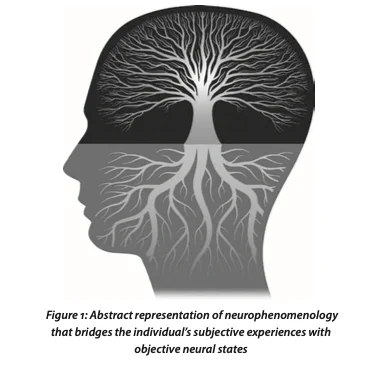
With the advent of cognitive neuroscience, meditation has been transformed into a contemplative science to provide the scientific community with a mechanistic model of how meditation works in correlation with neural activity in the brain. Further, the combination of ‘first-person descriptions’ of subjective experience, intrinsically obtained from ‘meditation states’, with ‘third person data’ acquired extrinsically from neuroelectric/neuroimaging data of the brain has resulted in a new research methodology called neurophenomenology that attempts to evaluate and understand the qualitative aspect of meditation practice with higher accuracy.14, 15 Thus, the modern neuroscientific research of meditation, which adopts neuroelectric and neuroimaging methods to map the brain activations during meditation, applies neurophenomenology to bridge subjective experiences with objective neural states (Figure 1).
3.1.1. Neuroelectric Signature of Meditation
EEG (Electroencephalogram) signal is a possible objective measure of meditation ability since electric signals are sensitive to meditation changes and thereby modifying the neural correlates associated with meditation. Since each meditation category could be identified by a unique cognitive process, attempts have been made to associate meditation categories with unique EEG signatures. While deriving the meditation signature, studies indicate that meditation technique, meditative experience, individual length of practice, and personal characteristics play a significant role and produce a unique signature.
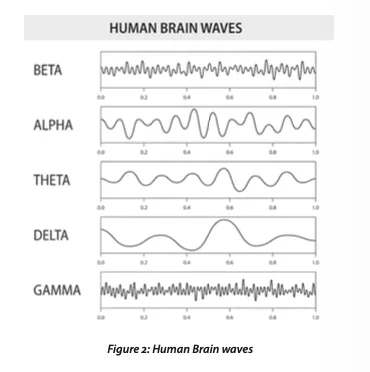
An example of the neuroelectric signature of meditation is that which is experienced by long-term meditation practitioners. They exhibit high amplitude synchronised gamma waves which indicate ‘highest quality of meditation by an expert meditator’. (Figure 2) (This doesn’t mean gamma waves are always indicators of highest quality of meditation as these waves are also observed in some epileptic seizures.) In a neurophenomenological sense, these give a subjective impression of fusion of subject and object with ‘dissolution of boundaries’ or transcendence including the perception of unity and coherence.
| Meditation expertise | EEG band | Neuroelectric signature | Experiential aspect (Subjective) |
|---|---|---|---|
| Expert (long-term) meditators | Gamma | Gamma synchrony in parietal and temporal regions (or) occipetal regions. | Experience of ‘dissolution of boundaries’ or transcendence, including the perception of unity and coherence. |
Table 1: Neuroelectric signature of meditation (long-term meditators)
3.1.2. Neuroimaging Signature of Meditation
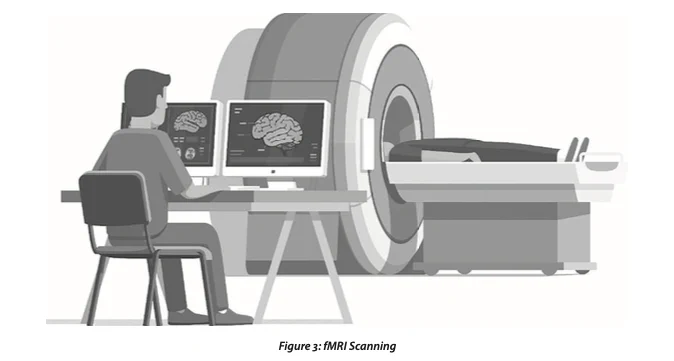
fMRI (Functional Magnetic Resonance Imaging) utilises the underlying principle of MRI (Magnetic Resonance Imaging) to produce high-resolution representations of neural activity over time (Figure 3). fMRI technology takes advantage of the signal intensity of haemoglobin within the brain—the protein in the blood that carries oxygen to cells. The ability to examine changes in oxygen metabolism in the brain over time serves as an indirect measure of neural activity. fMRI can produce images with a high spatial resolution (the ability to map neural activity in the exact location of the brain) of less than a millimetre and can enable us to identify the activations/deactivations in the brain with higher location accuracy.
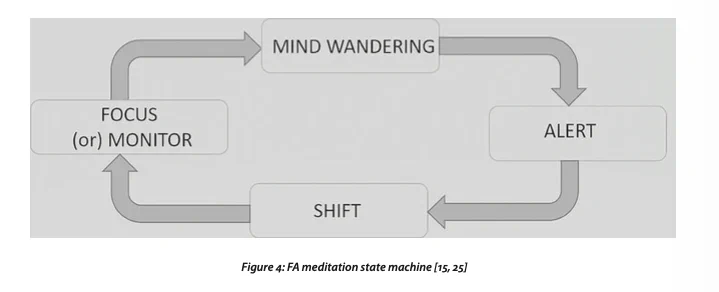
DMN (Default Mode Network) is a group of anatomically separate regions in the brain that are active when the brain is involved in mind wandering, mental rumination, autobiographical memory, and self-reflection. The major nodes of DMN involve mPFC (medial PreFrontal Cortex), ACC (Anterior Cingulate Cortex), PCC (Posterior Cingulate Cortex), and PCU (Precuneus). In a typical meditation session, the meditator is cyclically involved in the following four states that involve mind-wandering, awareness of mind-wandering, shifting back to meditation, and sustaining focus. While scanning the brain of a meditation practitioner using fMRI, the PCC and PCU were activated when the practitioner’s mind was wandering. The impact of FA meditation and OM meditation was studied in long-term meditators and it was found out that main nodes of DMN were deactivated in the case of experienced meditators. Deactivation in PCC and PCU seems to be a neuroimaging signature of a meditative state.
| Brain Region | fMRI Signature |
|---|---|
| Posterior cingulate cortex (PCC) and precuneus (PCU) | Deactivation in PCC and PCU |
Table 2: Neuroimaging signature of meditation (long-term meditators)
4. Research on Visualisation in Meditation Practice
4.1. Visualisation Based Meditation
Visualisation based meditations are common in contemplative practices across Hinduism and Buddhistic traditions. As one of the Hindu Tantric yoga traditions, the practice of meditation involves focusing on the internal visualisation of a chosen deity with mantra repetition typically sitting in Padmāsana or lotus posture with closed eyes. The meditator attempts to visualise the chosen image deity, thereby cultivating focus while at the same time monitor for distraction. The practitioner shifts attention back to the visualisation when mind wandering is alerted by an individual’s meta-awareness (Figure 4). The mantra recitation engages verbalisation that augments the effects of visualisation which otherwise could lead to mind-wandering due to auditory absence during visualisation, especially in novice meditators. A good comparison is to observe engagement levels of an individual who watches a silent movie where the individual tends to get distracted within short duration since visual engagement is only present while auditory engagement is absent.
4.2. Clarity and Stability in Visualisation-based Meditation
In a visualisation meditation practice, the quality of the meditation is attributed to the stability and clarity of the visualisation. Clarity refers to the sharpness or vividness of the appearance of the chosen image, while stability refers to holding the focus on the chosen image without being distracted by wandering thoughts and sensory perceptions. According to earlier scientific research, the mentalisation of a visual image for a long time was thought to be impossible as the images will fade in a matter of seconds because of the low capacity of visuospatial memory. But, in a breakthrough scientific study conducted on long-term meditation practitioners, new findings indicated that monks were able to hold the visualisation for hours with high clarity and no major distraction dispelling the myth that visual working memory cannot be enhanced. With repetitive practice, this manner of focused thinking and visualising can become habitual for practitioners, instead of random mind wandering or mental rumination that occurs commonly during everyday activity.
5. Research on Factors Influencing Meditation—‘Person’ and ‘Practice’ Variables
5.1. ‘Person’ and ‘Practice’ Variables Influencing Meditation
The ‘Person’ variable indicates the characteristics of the meditator and the ‘Practice’ variable refers to the nature of specific meditation practice practised by the meditator. ‘Person’ variables include personality traits such as temperament and character, expectation and motivation of the meditator, meditation training (details of meditation training including age at the commencement of training, type of training, regularity and duration of practice, preference for specific meditation practice). ‘Practice’ variable indicates the detailed procedure of the meditation practice that could be replicated, specific lineage or tradition that it is based upon, posture, eye attitude (open/closed), and attention direction (visualisation, breathing, body sensations, auditory repetition, and so on).
5.1.1. Personality Traits—Temperament and Character of the Meditator
Specific temperament and personality traits seem to influence individuals engaged in a long-term meditation practice spanning their entire life. The scientific measure of personality and temperament (Temperament and Character Inventory) have been shown to correlate with meditation performance.
5.1.2. Expectation and Motivation of the Meditator
The expectation in meditation practitioners usually refers to a yearning for a certain feeling or experience or a higher state after the meditation practice. The continual anticipation of a higher state/experience would often hinder the practice if things do not proceed as expected. For meditation practitioners, one of the helpful ways to think about meditation is to pay attention to the means—the process of meditation where one learns to maintain focus and train one’s attention to be on the present-moment experiences, rather than the end result of attaining to a higher state/experience. Additionally, the key to meditation is to accept all experiences with a non-judgemental and non-reactive attitude.
5.1.3. Effortful vs Effortless Practice by the Meditator
One of the important aspects of meditation practice is the amount of effort utilised in attaining the meditation state. The initial meditation practice involves significant exertion required to maintain the focus for the entire period of meditation practice. The reason for exerting a lot of effort is often due to the higher tendency of mind-wandering, typically seen in novice meditators. Expert meditators who are at an advanced stage of practice, tend to use minimal energy to stay focused as their mind-wandering has considerably reduced due to their long-term practice. One of the key factors distinguishing novice meditators from expert meditators is to check if they deploy an effortful or effortless practice respectively to attain the meditation state.
5.1.4. Long-term Contemplative Practice vs Short-term Secular Practice by the Meditator
Meditation has predominantly been established as a long-term contemplative practise within the boundaries of traditional centres of learning with a proven time-tested system under the guidance of an experienced meditator. In many ancient traditions, the meditation technique is taught to a disciple (student) by the Guru (experienced teacher), who understands the individual characteristics of the disciples and instructs them accordingly. But, in the modern digital age, with the expansion of short-term fast-tracked secular meditation approaches with limited guidance from inexperienced instructors, we do not find the comprehensive knowledge and training system to deal with adverse experiences of meditation. In the contemplative yogic traditions, Yama (abstentions/restraints) and Niyama (observances/disciplines) are pre-requisites to practise meditation. Without attaining minimum purity of mind through Yama-Niyama, if one attempts to meditate for a longer period, concentration will converge on the impurities of the mind, which is dangerous in the early part of the contemplative life.
6. Research on Unifying Scientific Theory of Brain and Meditation
A unifying scientific theory of the mind, brain, and behaviour, has been missing until more recently.39 An eminent neuroscientist, Karl Friston, whose theory of ‘Free Energy principle’40 (and predictive processing using Bayesian approach) is gaining greater scientific traction, and this might be the most all-encompassing idea since Charles Darwin’s theory of natural selection.41
The second law of thermodynamics states that the universe proceeds towards entropy or dissolution, but living organisms resist it by maintaining themselves as a separate entity from their environment.41 To survive, an organism (brain in neuroscience) has to be proactive by retrieving its past experiences from the memory to interpret the stream of sensory information that is being directed at them so as to predict the immediately relevant future.42 To improve its predictions, the brain attempts to minimise the difference between its predictions and the sensory input information (that is, free energy or prediction error).39
Let us try to understand this concept with the help of an example. In a game of cricket, a batsman facing a delivery from a pace-bowler (in order to avoid losing the wicket) has to proactively do a quick mental scan and assess the various types of deliveries (reverse swing, yorker, slow-ball) that the bowler has bowled in the past. Now, while the bowler bowls, the batsman (with external eyes) gets real-time visual sensory data such as the bowler’s speed of releasing the ball, the direction of the ball delivery, and correlate these with the bowler’s type of deliveries bowled in the past. With this comparison, the batsman makes a prediction about the type of delivery expected from the bowler so that the batsman can adapt and bat accordingly with a minimum ‘expected surprise’ (when the prediction error is minimal).
Having a mind that is constructed based on past experiences is beneficial in many circumstances, since it is adapted to align the individual’s needs within its environment. Yet, a mind that too often dwells into habitual thinking patterns becomes stubborn and rigid, and is not flexibly adapted to changing situations.
Meditation does exactly the opposite—aims at deconstructing the mind from within, allows one to experience things afresh, and enables one not to be determined by acquired mental habits thereby emphasising the reduction of habitually generating predictions based on past experience. FA, OM, and NDA meditations gradually bring the practitioner more into the present moment, thereby reducing the mental ruminations from the past and inhibiting deep predictive processing in the brain. In addition, meditation enables insights or Aha! moments (A good example of an Aha! moment is the famous chemist August Kekule’s vision of a snake biting its tail, a dream that supposedly revealed the true structure of the benzene ring). These instantiate fact-free learning which involves the discovery of a solution, idea, or perspective without new information. Overall, meditation in contemplative traditions provides greater insights into the purpose of life by deconditioning the predictive mind, which typically projects the past onto the present.
7. Overemphasis of Neuroscientific Studies in Meditation Research
Modern-day meditation research is a multidisciplinary field where philosophy, spirituality, and STEM subjects such as psychology, neuroscience, signal/image processing, and deep learning are involved. But many times, neuroscientific explanations (even when neuroscience information is irrelevant to the logic of the explanation) are more persuasive to the common people and they supersede alternative better explanations given in other fields such as philosophy or psychology.43 For neuroscience experts, this is not the case, as they disregard neuroscientific evidence if it is not relevant to the explanation.36
As the foundation of neuroscience is built upon the idea of a material basis of the mind,44 the brain has taken centre stage, rooted in neurobiological and neurochemical aspects.45 One of the objectives of meditation in the contemplative traditions is to move away from gross matter and observe the subtler phenomena. But the neuroscientific studies may be doing the opposite by swaying the meditation practitioner to ideate on the ‘material brain’ rather than the ‘subtler mind’.
8. Future Directions
In the past two decades, meditation research has come a long way from the infant phase to the adolescent phase. In recent years, meditation and contemplative neuroscience have formed a powerful alliance, each supporting and reinforcing the other.44 At this stage, neuroscience doesn’t yet explain the spiritual aspects of meditation, but it gives a unique understanding of meditation by offering insight into the meditative processes that could actually help in improving the meditation practice. With this collaborative approach, the contemplative neurosciences have evolved rapidly and need to expand their research onto meditation-related experiences that defy conventional scientific logic. This would help a meditation practitioner recognise ways to deepen the spiritual experience and continue a disciplined approach to meditation,46 in the quest for realisation of the ultimate Reality.
9. Conclusion
Since the dawn of human civilisation, human beings have had an uncanny capacity to develop innovations that are double-edged swords—which can both benefit and harm humanity.47 As with any innovation, one finds time and again a conflict between dual forces entering the human race with one group favouring the innovation while the other group disapproving it. With a simple analogy of fire that helps in our everyday cooking but can burn our home if not vigilant, a better approach at this juncture is to encourage multi-disciplinary meditation research and thereby practising meditation so that it provides insight in understanding the fundamental purpose and essence of human existence.
References
- The Complete Works of Swami Vivekananda, 9 vols (Calcutta: Advaita Ashrama, 1–8, 1989; 9, 1997), 4.230.
- Walach, H., ‘Towards an Epistemology of Inner Experience’, in Meditation—Neuroscientific Approaches and Philosophical Implications, eds. S Schmidt and H Walach (Switzerland: Springer International Publishing, 2014), 7–22.
- Bhuvanesh Awasthi, ‘Issues and perspectives in meditation research: in search for a definition’, Frontiers in Psychology (10 January 2013), 3: 613.
- B Rael Cahn and John Polich, ‘Meditation states and traits: EEG, ERP, and neuroimaging studies’, Psychological Bulletin, 132/2 (March 2006), 180–211.
- Antoine Lutz, et al., ‘Attention regulation and monitoring in meditation’, Trends in Cognitive Sciences, 12/4 (April 2008), 163–69.
- Zoran Josipovic, ‘Neural correlates of nondual awareness in meditation’, Annals of the New York Academy of Sciences (January 2014), 1307: 9–18.
- Jonathan D Nash, Andrew Newberg, and Bhuvanesh Awasthi, ‘Corrigendum: Toward a unifying taxonomy and definition for meditation’, Frontiers in Psychology (9 October 2019), 10: 2206.
- Swami Paramashivananda, Meditation Quotient (MQ)—A Qualitative Evaluation of Focused Attention, Open Monitoring and Non-Dual Awareness Meditation practices in the light of cognitive neuroscience and neurophenomenology (Howrah: Ramakrishna Math, Belur Math: Probationers’ Training Center, 2014).
- Fred Travis and Jonathan Shear, ‘Focused attention, open monitoring and automatic self-transcending: Categories to organise meditations from Vedic, Buddhist and Chinese traditions’, Consciousness and Cognition, 19/4 (December 2010), 1110–18.
- Zoran Josipovic, ‘Duality and nonduality in meditation research’, Consciousness and Cognition, 19/4 (December 2010), 1119–21; discussion 1122–23.
- David Loy, Nonduality: A Study in Comparative Philosophy, (New York: Prometheus Books, 2012).
- Longchen Rabjam, The Precious Treasury of the Basic Space of Phenomena (California: Padma Publishing, 2001), ix, 141.
- Zoran Josipovic and Bernard J Baars, ‘What Can Neuroscience Learn from Contemplative Practices?’, Frontiers in Psychology (10 Nov 2015).
- Antoine Lutz and Evan Thompson, ‘Neurophenomenology: Integrating subjective experience and brain dynamics in the neuroscience of consciousness’, Journal of Consciousness Studies (January 2003), 10 (9–10): 31–52.
- Wendy Hasenkamp, ‘Using First-Person Reports During Meditation to Investigate Basic Cognitive Experience’, in Meditation—Neuroscientific Approaches and Philosophical Implications, eds. S Schmidt and H Walach (Switzerland: Springer International Publishing, 2014).
- Asieh Ahani, et al., ‘Quantitative change of EEG and respiration signals during mindfulness meditation’, Journal of NeuroEngineering and Rehabilitation, 11 (87) (14 May 2014).
- Juergen Fell, Nikolai Axmacher, and Sven Haupt, ‘From alpha to gamma: Electrophysiological correlates of meditation related states of consciousness’, Medical Hypotheses, 75/2 (August 2010), 218–24.
- Jake H Davis, and David R Vago, ‘Can enlightenment be traced to specific neural correlates, cognition, or behavior? No, and (a qualified) Yes’, Frontiers in Psychology (22 November 2013), 4: 870.
- Tobias Esch, ‘The Neurobiology of Meditation and Mindfulness’, Meditation—Neuroscientific Approaches and Philosophical Implications, eds. S Schmidt and H Walach (Switzerland: Springer International Publishing, 2014).
- Antoine Lutz, et al., ‘Long-term meditators self-induce high-amplitude gamma synchrony during mental practice’, Proceedings of the National Academy of Sciences, USA, 101/46 (16 November 2004), 16369–73.
- Matt Carter and Jennifer Shieh, ‘Whole Brain Imaging’, Guide to Research Techniques in Neuroscience, (Amsterdam, Netherlands: Elsevier, 2009), 1–37.
- Rozalyn Simon and Maria Engström, ‘The default mode network as a biomarker for monitoring the therapeutic effects of meditation’, Frontiers in Psychology (9 June 2015), 6: 776.
- Marcus E Raichle, et al., ‘A default mode of brain function’, Proceedings of the National Academy of Sciences, USA, 98/2 (16 January 2001), 676–82.
- Peter Fransson and Guillaume Marrelec, ‘The precuneus/posterior cingulate cortex plays a pivotal role in the default mode network: Evidence from a partial correlation network analysis’, NeuroImage, 42/3 (1 September 2008), 1178–84.
- Wendy Hasenkamp, et al., ‘Mind wandering and attention during focused meditation: A fine-grained temporal analysis of fluctuating cognitive states’, NeuroImage, 59/1 (2 January 2012), 750–60.
- Matthieu Ricard, Antoine Lutz, and Richard J Davidson, ‘Mind of the Meditator’, Scientific American, 311/5 (November 2014), 38–45.
- Judson A Brewer, et al., ‘Meditation experience is associated with differences in default mode network activity and connectivity’, Proceedings of the National Academy of Sciences, USA, 108/50 (13 December 2011), 20254–59.
- Dusana Dorjee, ‘Visualisation in meditation practice’, Neuroscience and Psychology of Meditation in Everyday Life: Searching for the Essence of Mind (United Kingdom: Routledge, 2017), 105–22.
- Stephen M Kosslyn, Image and Brain: The Resolution of the Imagery Debate (Massachusetts, US: MIT Press, 1996).
- Maria Kozhevnikov, et al., ‘The Enhancement of Visuospatial Processing Efficiency Through Buddhist Deity Meditation’, Psychological Science, 20/5 (May 2009), 645–53.
- John W Thomas, and Mark Cohen, ‘A methodological review of meditation research’, Frontiers in Psychiatry (1 July 2014), 5(74): 1–12.
- Yi-Yuan Tang and Rongxiang Tang, ‘Meditation over the lifespan’, The Neuroscience of Meditation (US: Academic Press, 2020), 139–60.
- D Garcia, et al., ‘Temperament and Character Inventory (TCI)’, Encyclopedia of Personality and Individual Differences, eds. V Zeigler-Hill and T K Shackelford (Switzerland: Springer International Publishing, 2017), 1–3.
- Tetsuya Takahashi, et al., ‘Changes in EEG and autonomic nervous activity during meditation and their association with personality traits’, International Journal of Psychophysiology, 55/2 (February 2005), 199–207.
- Yi-Yuan Tang and Rongxiang Tang, ‘Critical questions and future directions in meditation’, The Neuroscience of Meditation (US: Academic Press, 2020), 191–210.
- Dusana Dorjee, ‘Long-term meditation practice’, Neuroscience and Psychology of Meditation in Everyday Life: Searching for the Essence of Mind (United Kingdom: Routledge, 2017), 27–51.
- S Deepeshwar, et al., ‘Evolution from four mental states to the highest state of consciousness: A neurophysiological basis of meditation as defined in yoga texts’, Progress in Brain Research, ed. N Srinivasan (Netherlands: Elsevier, 2019), 31–83.
- Swami Yatiswarananda, ‘Concentration and Meditation’, Meditation and Spiritual Life (Kolkata: Advaita Ashrama, 2007), 327.
- Ruben E Laukkonen and Heleen A Slagter, ‘From many to (n)one: Meditation and the plasticity of the predictive mind’, Neuroscience and Biobehavioral Reviews (June 2021), 128: 199–217.
- Karl J Friston and Klaas E Stephan, ‘Free-energy and the brain’, Synthese, 159/3 (5 September 2007), 417–58.
- Shaun Raviv, ‘The Genius Neuroscientist Who Might Hold the Key to True AI’, Wired (13 November 2018).
- Kestutis Kveraga, Avniel S Ghuman, and Moshe Bar, ‘Top-down predictions in the cognitive brain’, Brain and Cognition, 65/2 (November 2007), 145–68.
- Deena S Weisberg, et al., ‘The Seductive Allure of Neuroscience Explanations’, Journal of Cognitive Neuroscience, 20/3 (March 2008), 470–77.
- Miguel Farias, et al., ‘Neuroscience and Meditation: Help or Hindrance?’, The Oxford Handbook of Meditation (UK: Oxford University Press, 2021).
- Nikolas Rose and J M Abi-Rached, Neuro: The New Brain Sciences and the Management of the Mind (US: Princeton University Press, 2013).
- H L Edge, ‘Does Meditation Give Us Unique Insight into Ultimate Reality? The Ethical Aim of Buddhism’, Meditation—Neuroscientific Approaches and Philosophical Implications, eds. S Schmidt and H Walach (Switzerland: Springer International Publishing, 2014), 271–96.
- J Canton, ‘Toward Our Neurofuture: Challenges, Risks, and Opportunities’, Neurotechnology Premises, Potential, and Problems, ed. J Giordano (Florida, US: CRC Press, 2012), xiii–xvii.